IMT@30: Building the World We Want
An introduction from our CEO
IMT@30

IMT’s 30th anniversary is about all that we have been able to achieve since our founding: The policies we have helped write and implement, the energy we’ve helped save, and the people who benefit from better buildings, lower costs, and cleaner air. All of this is possible because of our cross-sector partnerships over the last three decades, spanning government, real estate, nonprofits, and communities.
The Future of Buildings








Thank you to our IMT@30 sponsors
Our 30th anniversary celebration is made possible by the generous support of organizations committed to a more efficient, affordable, and resilient built environment.








Donate to IMT@30
Make a gift to IMTDonate to IMT@30
30 Years of IMT · 1996 – 2026
The David B. Goldstein Fellowship
David B. Goldstein championed energy efficiency and climate action over a distinguished career that spanned continents, disciplines, and decades. He co-founded the Institute for Market Transformation (IMT) in 1996 to address what he saw as an economy riddled with market failures that waste energy, destroying business opportunity and environmental quality. David was a guiding force for IMT, even as our work changed and expanded. He served on IMT’s Board of Directors until his passing in 2024.
David consistently encouraged the next generation of leaders to find their place and contribute to a shared vision of a prosperous and sustainable built environment. This year we launched David B. Goldstein Fellowship to honor his legacy.
Donate to the fellowship
Shaping Building Performance
Navigating funding uncertainty through the National BPS Coalition
Building improvement policies and programs are carried out at the local level, and city and state governments plan their work around federal funding and agency coordination. While some federal funding has started to move again in the past year, uncertainty around major federal programs has made staffing, stakeholder engagement, and implementation support very challenging. In 2026, IMT used the National Building Performance Standards Coalition to convene nearly 200 local government staff members to understand the latest developments, compare experiences, and identify next steps.
Leading the field on policy
IMT remains the leading expert on building performance policies for existing buildings. IMT’s decades of policy work have paid off this year as the first BPS compliance results show great promise with high compliance rates and demonstrated deep energy savings. IMT is taking lessons from the field and building on them with new research and analysis, including six 2026 Summer Study papers, as well as several podcasts and numerous articles on BPS. IMT has also served as a hub for information about the evolving legal landscape of building performance policies. Additionally, IMT continues to serve on the ASHRAE Standard 100 committee, which is working to integrate IMT’s model laws with industry standards for efficiency and decarbonization.
Providing hands-on support for action
IMT’s expertise comes from on-the-ground experience. This year, IMT’s technical assistance team supported legal authority and legislative drafting needs, and provided expert capacity on energy benchmarking, utility data access, implementation capacity planning, alternative compliance, and stakeholder and community engagement. Our work served Atlanta, GA; Cleveland, OH; Columbus, OH; Philadelphia, PA; Pittsburgh, PA; St. Louis, MO; Los Angeles, CA; West Hollywood, CA; Washington, DC; Evanston, IL; Boston, MA; Denver, CO; and the state of Hawaiʻi.
Evanston, IL
With IMT’s support, Evanston’s BPS law codified a Healthy Buildings Accountability Board for its BPS, giving local community members a formal role in shaping how the policy is implemented. Evanston also drew on IMT’s model BPS law and alternative compliance models to give owners with unusual building conditions or other barriers a way to make meaningful performance improvements through a plan tailored to their property and developing an Equity Priority Buildings criteria.
Atlanta, GA
IMT helped Atlanta set building performance policy goals and an adoption timeline, assess gaps in its benchmarking data, and examine its legal authority. We used that work to develop a BPS readiness roadmap and policy options matrix, alongside plans for stakeholder engagement and coordination across city departments. Atlanta now has a clearer basis for deciding which policies it can pursue and what data, staffing, and coordination it needs to put them into practice.
Columbus, OH
IMT reviewed Columbus’s proposed BPS ordinance and advised on performance targets, staffing, budget, and options for a high performance building hub to assist owners. We brought those recommendations together in an implementation roadmap and workplan that show who would do what and when. City staff now have a plan for preparing rules, setting up owner assistance, and launching the first compliance cycle after adoption.
Los Angeles, CA
As part of the team advising the Los Angeles Department of Building and Safety, IMT helped develop a proposed BPS and evaluate how the city could administer and enforce it. We examined flexible compliance options, how different enforcement mechanisms could work, and the staffing and owner assistance needed to launch the program. That work gave the city a clearer view of the decisions it needs to make before adopting a policy that could cover about ~14,000 buildings, including how to support affordable housing and other properties with limited resources for upgrades.
Philadelphia, PA
IMT worked with city staff and RMI to refine potential BPS targets and advised the city on engagement with building owners, affordable housing providers, utilities, public schools, and other stakeholders. We also helped the city explore how a community accountability board (CAB) could help oversee BPS funds through the aid of a legal partner. The work helped inform the city’s case for a BPS and identify where owners may need technical or financial support to make upgrades.
Washington, DC
IMT continued to support the District of Columbia in its implementation of the first-in-the-nation BPS through chairing the BEPS Task Force and multiple subcommittees to address key issues including new alternative compliance pathways, credit for good faith efforts, and setting long-term targets. The DC BEPS is already showing strong success, with low-performing buildings that did not meet the standards already having cut their energy use by 13%; in contrast, buildings that met the standards already have on net saved no further energy.
St. Louis, MO
IMT supported St. Louis’s second compliance cycle through technical analysis and development of proposed BEPS targets, which were adopted by the City’s Building Energy Improvement Board (BEIB). Now, we have been working with the Mayor’s Office and local partners on proposed amendments to the city’s existing BEPS ordinance. Our drafting support provides changes that would give staff a clearer basis for administering the program and help owners understand their obligations when a property changes hands or a compliance decision is disputed.
Expanding access to better buildings
To support the wide range of conditions in existing buildings, IMT has developed a consistent framework for alternative compliance options that can be adopted across jurisdictions with building performance policies. Staff have presented ideas for streamlining these options at major events, including ACEEE Summer Study, ASHRAE Building Decarbonization Conference, NYC Climate Week, and Greenbuild.
Clearinghouse for federal policy and programs
IMT has continued to coordinate the field and support active peer exchange across local government, industry, and other advocates for better buildings. This includes sweeping changes to federal agencies and programs, and in particular has focused advocating for the future of the ENERGY STAR program. In the last year, we hosted and participated in more than a dozen briefings so that industry insiders anticipated changes before they happened, and ensured unified messaging for the program’s priorities as it transitions from EPA to DOE.
IMT in Action
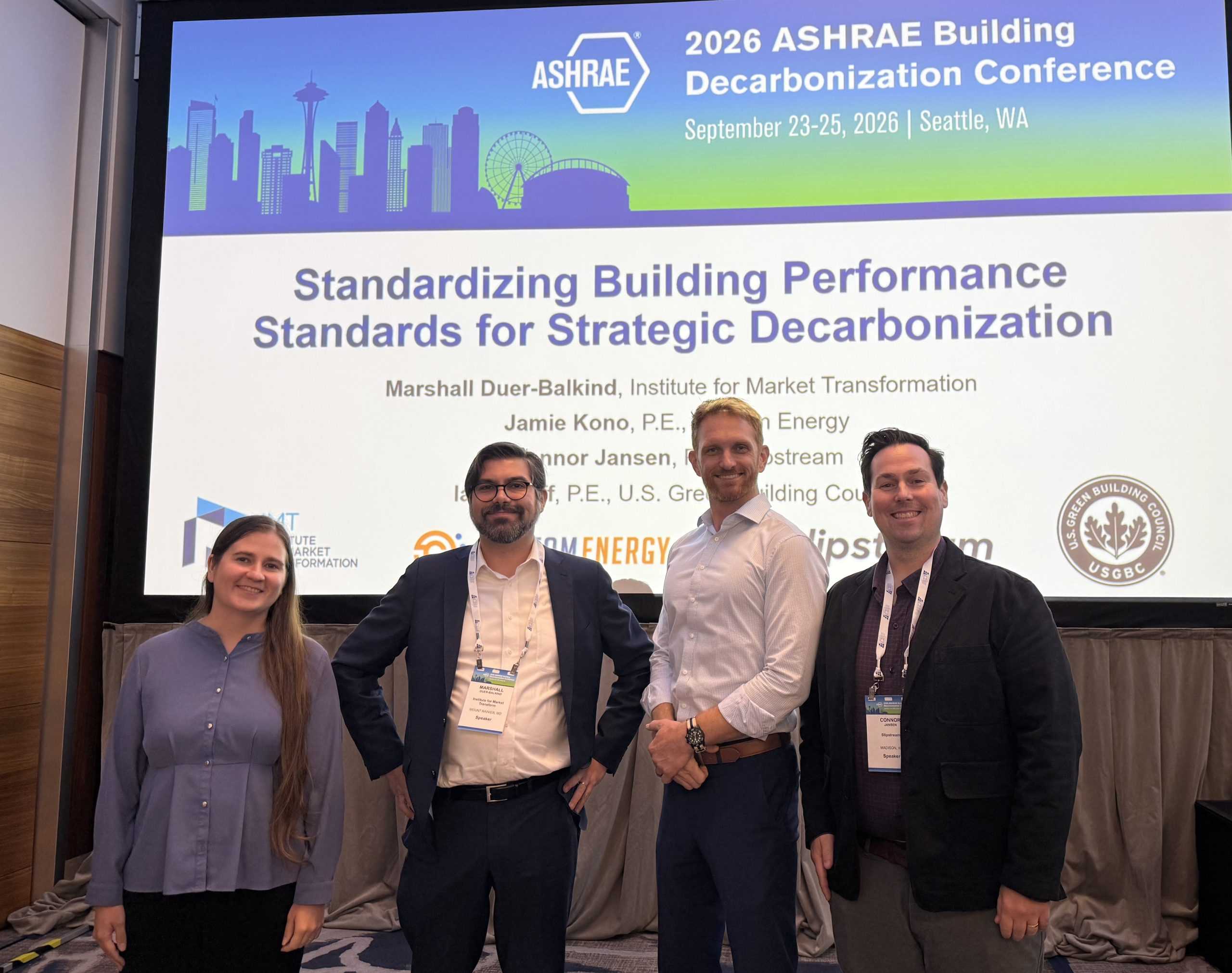
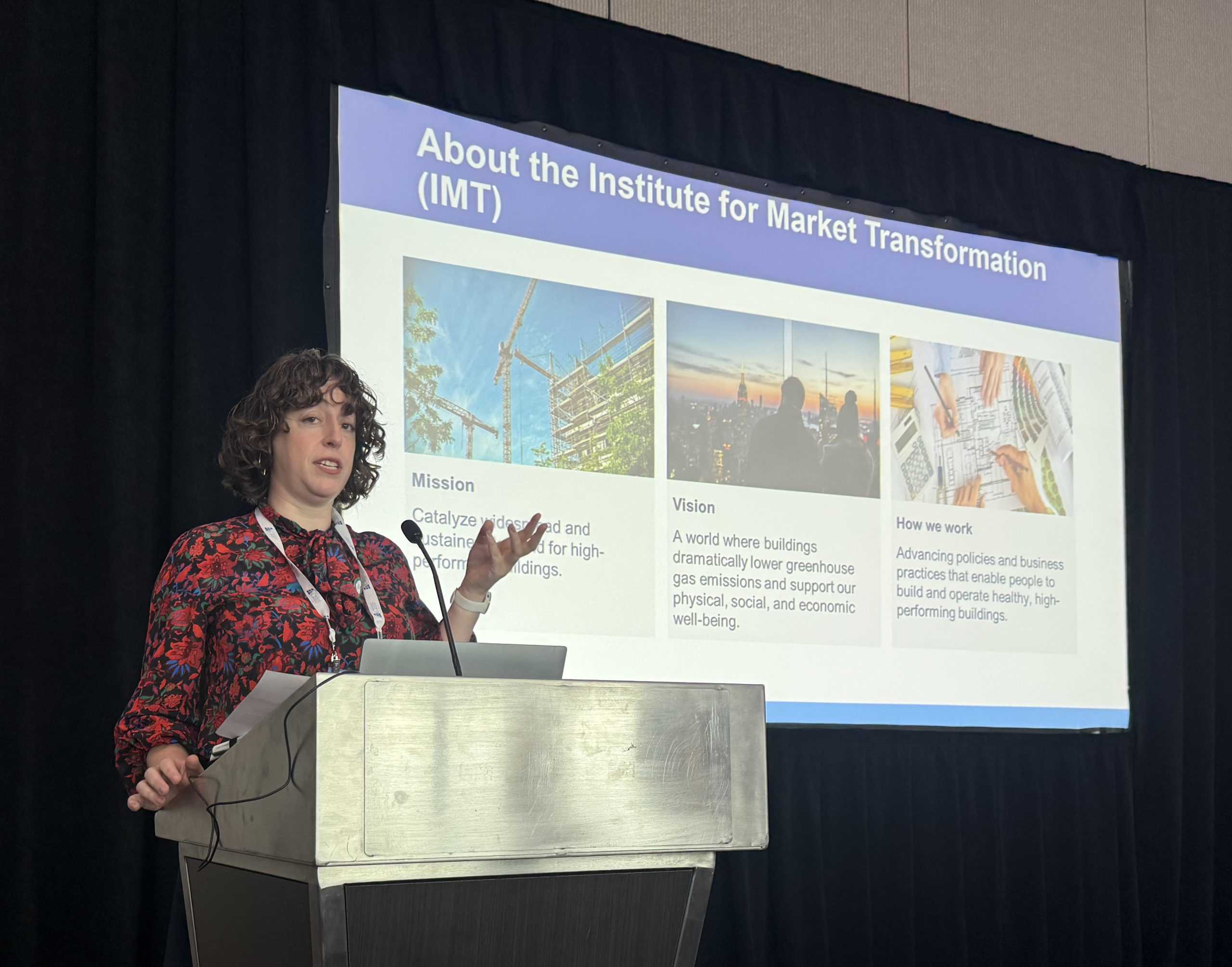
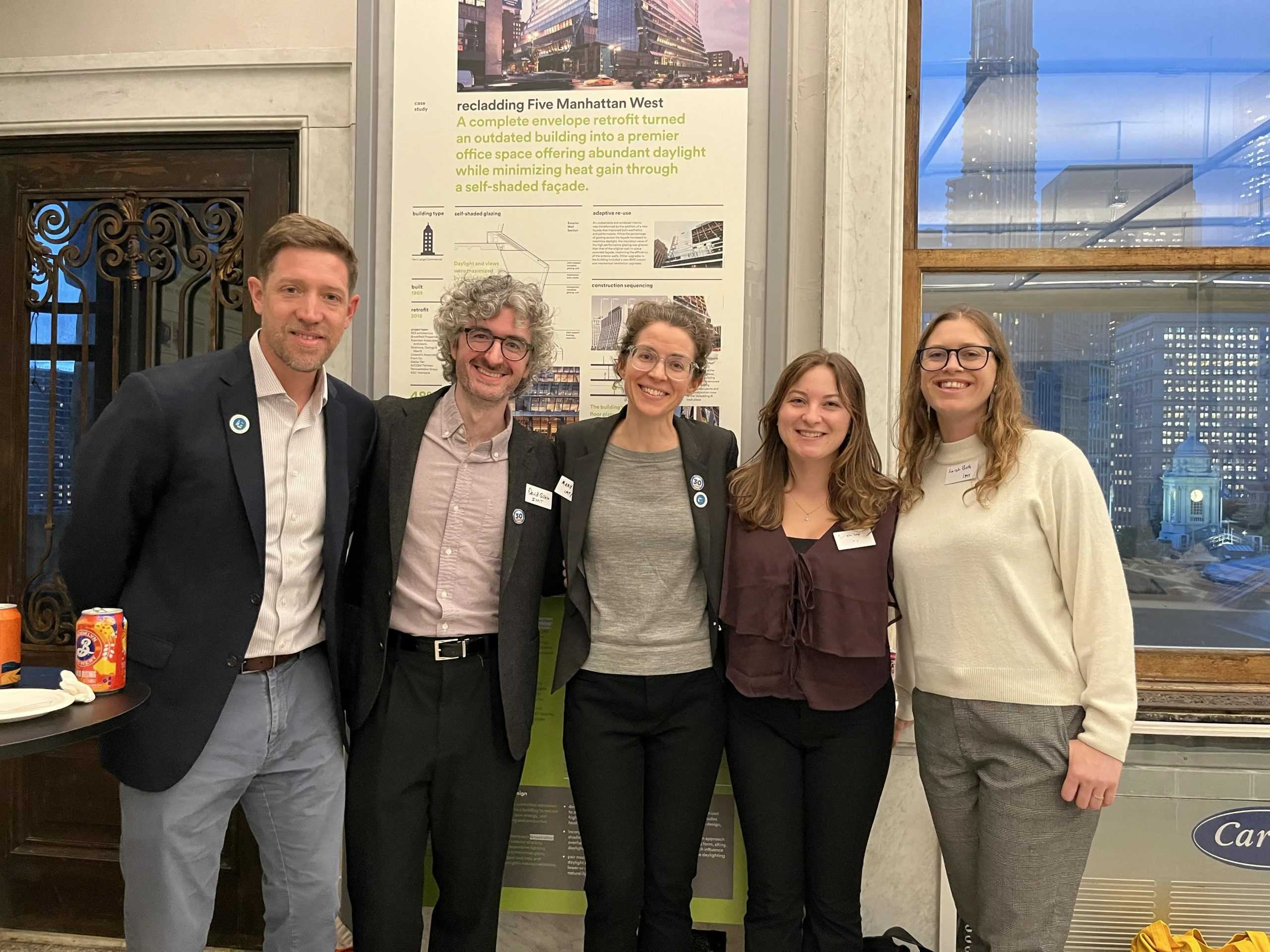

Thank you for making time to support municipal staff with the resources we need to inform decision-making! Here's to 300 more years!
2026 by the numbers
DC’s BPS helped lower-performing buildings cut energy use by an average of 13%
We reached more than 700 attendees through policy convenings
We worked in more than 60 cities and states in the U.S. and Canada
Local Engagement
Coalition-building in California
When the California Energy Commission (CEC) began drafting the state’s BPS strategy for SB48, IMT supported collaboration between community-based organizations (CBOs) and CEC staffers. The robust dialogue covered residential tenant protections, affordable housing, and community ownership strategies to improve equity outcomes. This process marked a milestone in statewide policymaking with local CBOs. Through this process, the CEC utilized tools like the Spectrum of Community Engagement to Ownership (see this video with its creator, Rosa González). As a result, SB48 Strategy Recommendations reflect many more community priorities than a traditional policy, and CBOs have new levels of access to government policymakers. Read more about community engagement and the work in California.
Daniel Carpenter-Gold and Chelsea Kirk
Helping small buildings in DC reduce energy costs
IMT’s Community Engagement team is collaborating with our Building Innovation Hub team to improve existing building systems through the Small Building Retuning Pilot Program with the District’s Department of Energy and Environment. Through the program, 10 under-resourced, small and mid-size buildings, including houses of worship, affordable multifamily housing, or class B/C commercial buildings, will receive support with energy efficiency improvements. The program has conducted retuning investigations in 7 out of 10 buildings and will complete work in 2027. IMT and the project partners will use the findings to scale the program across the District as the BEPS size threshold drops to smaller buildings and share learnings with our network of jurisdictions across the country.
Putting theory into practice
In 2025, IMT completed several projects that added to our on-the-ground experience with community ownership in building policy design. We worked with seven city and two state government agencies across nine jurisdictions to advance equitable building decarbonization policies; IMT synthesized those findings in a Summer Study paper and blog post on our work in St. Louis. The Community Engagement team also facilitated an introductory workshop on health, affordability, and climate resilience, and tribal authority to develop building codes.
Expanding the reach of our community engagement work
This year, IMT’s Community Engagement team set three new goals—deepening trust-centered partnerships, particularly with Tribal Nations; expanding equitable research and technical assistance for CBO partners; and increasing access to educational resources for frontline communities. Our newly updated Community Engagement Framework will guide our efforts to strengthen communities' ability to shape policies and solutions that affect them. The framework is available in English and Spanish. Read more in this blog post from Director Precious Rideout.
Defining healthy buildings in the U.S.
While the impact of buildings on occupant health has become increasingly important in the national consciousness, the U.S. lacks a standard approach to assess, monitor, and address how buildings affect health. In partnership with VELUX, IMT conducted a national survey to better understand how residents across the country perceive the impact of buildings on their health. IMT will use this data to create the first U.S. version of the Healthy Buildings Barometer—a project that has been ongoing in Europe for the last decade—to put forward discrete policy recommendations to move the national conversation forward.
IMT in Action



The impact of IMT’s leadership is visible in stronger communities, more resilient buildings, and a more sustainable future for all. Here’s to the next chapter of bold ideas, meaningful collaboration, and continued transformation.
2026 by the numbers
70% of respondents to the Healthy Buildings, Healthy Lives survey support government financial investment in healthier buildings
Through Community Climate Shift, we supported $480,000 in grants to community organizations for equitable decarbonization
195 downloads of our updated CE Framework
Transforming the Market
Creating Healthier, More Affordable Homes for DC Seniors: a case study video for the DCSEU
The Building Innovation Hub produces case studies to highlight local success stories and demonstrate how energy efficiency and decarbonization projects can be accomplished, providing examples for others. This past year, the Hub explored the deep energy retrofit at Victory Square Senior Apartments, a 97-unit affordable senior living facility in Southeast Washington, DC. The videos shows how, through the DCSEU’s Affordable Housing Retrofit Accelerator, this project improved building performance, decarbonized equipment, reduced energy costs for both the building owner and residents, and complied with DC’s BEPS.
Expanding high-performance leasing
IMT’s Green Lease Leaders program continued to grow in 2026 by attracting new domestic and international applicants, and by involving new real estate sectors. Applications are now available year round, with announcements made in the Spring. Additionally, in partnership with USGBC, the program awardees now qualify for LEED v.5 credit under the Core & Shell rating system. Program Director Diana Lee continues to serve as a leading expert. This year she co-authored a paper at ACEEE’s Summer Study and also spoke during NYC Climate Week and Greenbuild 2026.
Meeting Market Demand for Energy Policy Data
As building performance policies continue to reshape the market, businesses increasingly turn to IMT’s Corporate Engagement program program to stay ahead of the curve. More than 90% of clients are returning memberss—a strong testament to the program’s value. The program’s new Building Policy Explorer tier makes policy intelligence more accessible to smaller businesses and sustainability consultancies.
Improving buildings in the DC region
So far in 2026, IMT’s Building Innovation Hub hosted or participated in 35 events serving over 1,400 people in the Washington, DC metropolitan region. The Hub produces resources to help the local real estate community operate better buildings. Recently, the Hub expanded its support to Montgomery County, Maryland, which has helped the county reach an 80% on-time benchmarking compliance rate. See the DCSEU partner case study below for an example of how retrofits helped a senior housing community in DC.
Scaling Local Impact
The Building Innovation Hub is just one of the nine hubs in the Building Performance Partnership, a national network co-founded with the Building Energy Exchange. The network launched a new website this year and held its first in-person gathering in November. Additionally, the program now offers an affiliate membership type to help smaller jurisdictions engage in building performance implementation; Charlotte, NC, and Columbus, OH joined earlier this year. The BPP team also co-authored a Summer Study paper to further promote the value of local hubs for national change.
IMT in Action

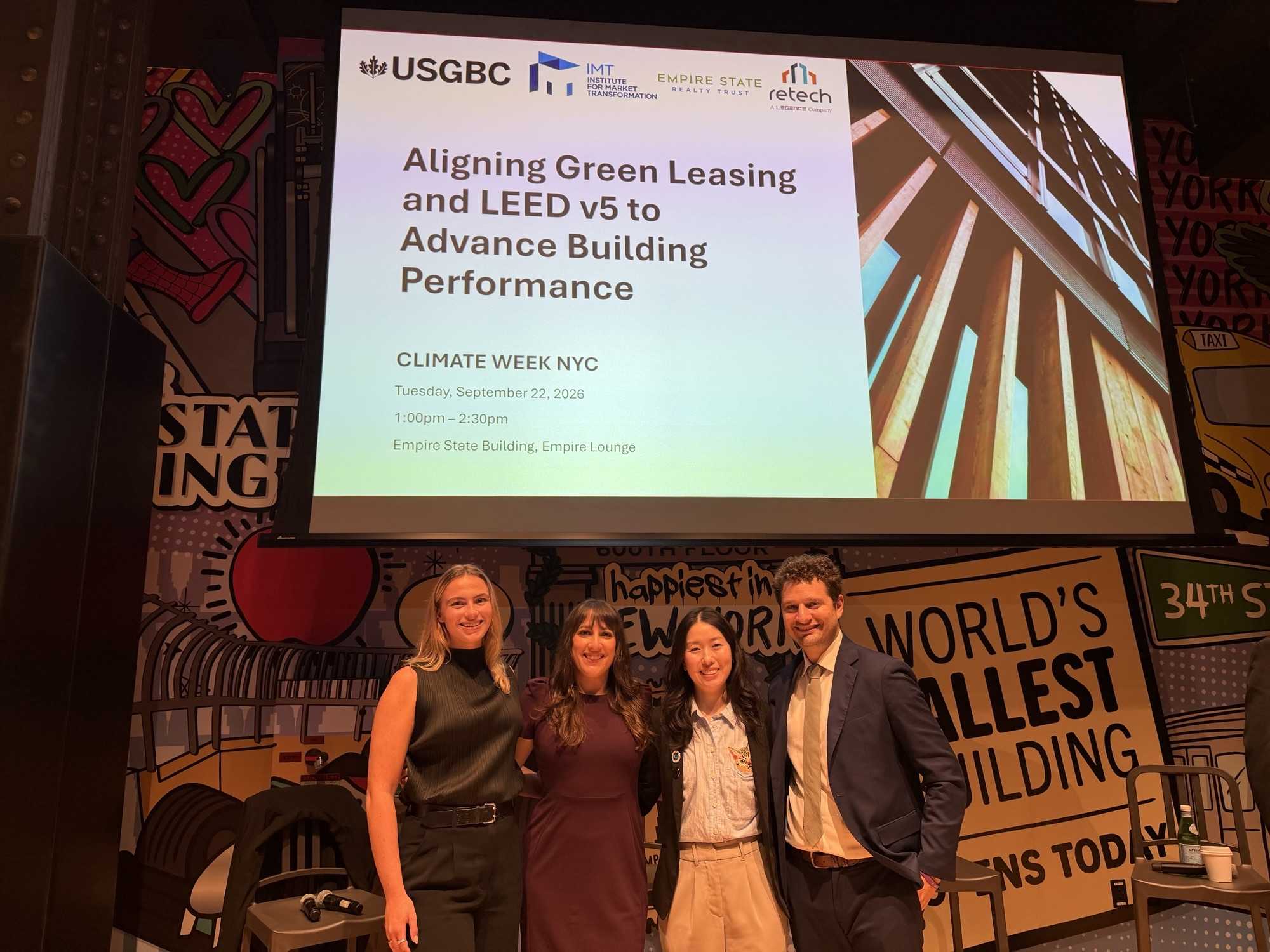


Happy 30th, IMT! Tango is proud to support your mission to make buildings more efficient, affordable, and resilient. Your policy work and partnerships have moved the whole industry forward. Congratulations on three decades of impact, and here's to the next 30 years.
2026 by the numbers
As of 2026, GLL covers over 9 billion sq ft of space around the world. A third of this year's winners are new to GLL and over 29% are international/outside of the U.S.
IMT’s Corporate Engagement program tracks and monitors more than 160 building performance policies
4,750 Building Innovation Hub newsletter and LinkedIn subscribers
BPP Network grew in membership by one-third and now covers over 8.66 billion square feet of real estate across the jurisdictions